Guides / Materials
Choosing Between 6061, 5083 and MIC-6 Aluminum Plate for a Vacuum Chamber
October 18, 2026
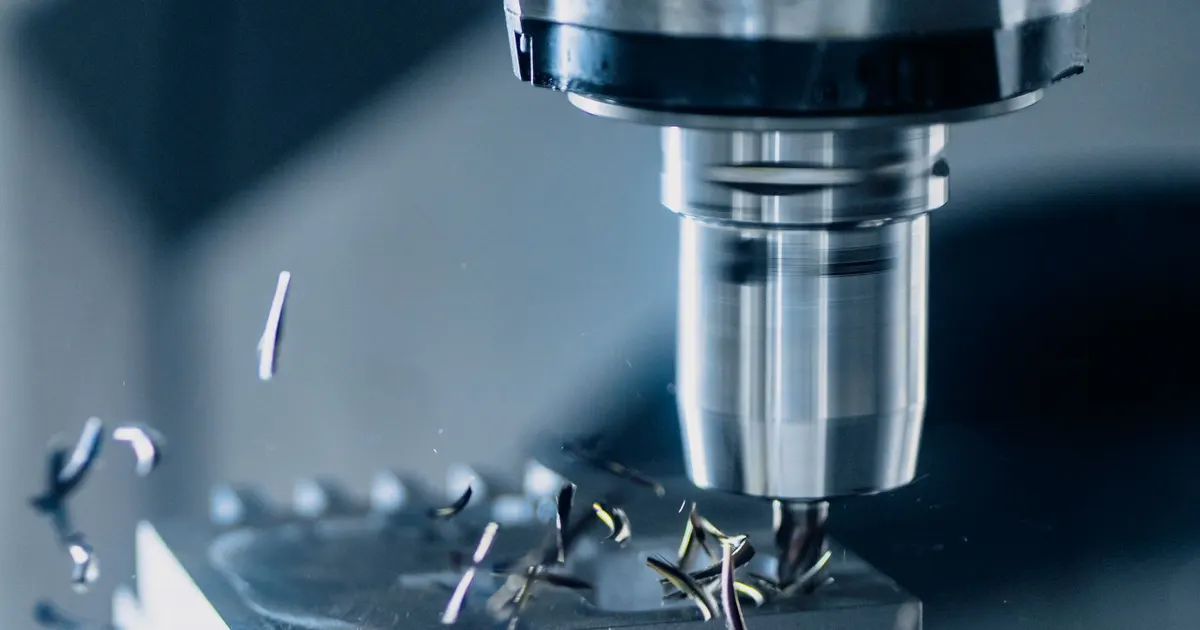
Large chamber parts start as plate. A lid, a body block or a base plate is cut from a slab and then pocketed, drilled and finished. The grade of the plate decides how flat the part stays when material comes out, whether it can be welded and how it behaves in the coating tank.
Three plate types come up on chamber drawings: 6061-T651, 5083 and MIC-6. They are not interchangeable, and the choice is easier to make when you know what each one is for.
What each plate is
6061-T651 is a wrought, heat treatable alloy of aluminum with magnesium and silicon. It is rolled to plate, solution treated, aged to T6 and stress relieved by stretching, which is what the 51 in T651 means. It is the common choice for chamber bodies, brackets and covers because it machines well, welds, anodizes and is widely stocked.
5083 is a wrought alloy of aluminum with magnesium, strengthened by work hardening and not by heat treatment. It is known for corrosion resistance and for welds that keep most of their strength, which is why it is used in welded structures. It machines less cleanly than 6061 and is softer.
MIC-6 is a trade name for cast aluminum tooling plate. It is cast, then milled flat on both faces and stress relieved, and sold as a plate that stays flat when machined. Other mills sell comparable cast plate under their own names, and the choice of name on the drawing should be confirmed with the supplier.
Properties side by side
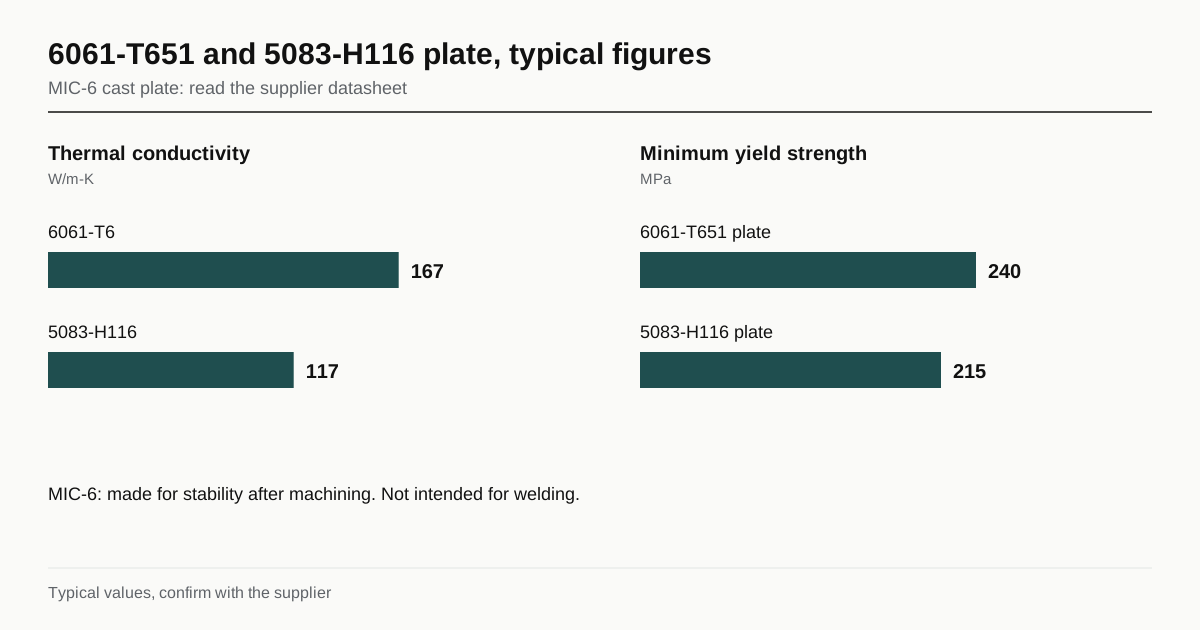
Figures are typical minimums or published ranges, and the mill certificate governs.
| Property | 6061-T651 | 5083-H116 | MIC-6 cast plate |
|---|---|---|---|
| Density | 2.70 g/cm3 | 2.66 g/cm3 | Close to wrought aluminum |
| Minimum yield, rolled plate | About 240 MPa | About 215 MPa | Lower, read the supplier data |
| Thermal conductivity | About 167 W/m-K | About 117 W/m-K | Read the supplier data |
| Weldable | Yes | Yes, strong welds | Not intended for welding |
| Stability after machining | Fair, depends on stock | Fair | Good, made for it |
| Relative plate price | Lowest | Moderate | Highest |
The table leaves MIC-6 mechanical figures to the supplier because published values vary with thickness and mill. For a part where strength carries a load, get the datasheet before the drawing is released.
Why plate stability matters
A chamber body is a large block with deep pockets. When a shop cuts a pocket, it removes material that was holding stress in the plate, and the rest of the part relaxes. A flat plate becomes a plate with a bow, and a sealing face that was flat becomes a face that is not.
The rolling and stretching in 6061-T651 reduces stress, and does not remove all of it. A heavy cut from one side followed by a cut from the other can move the part by tenths of a millimeter. Shops manage this by roughing, letting the part rest, stress relieving and finishing, which adds operations and time.
Cast tooling plate is made to avoid that. It is cast with a fine grain and stress relieved as part of the process, so material removal leaves it flatter. That is the reason for the price. For a sealing face that must stay flat after deep pocketing, it can be cheaper overall than a stress relief cycle on rolled plate, and the saving is hard to see on the plate line of a quote.
For flatness measurement, see how CMM reports show flatness.
Welding and joining
Welded chamber bodies are 6061 or 5083, not cast plate. 6061 welds with a filler such as 4043 or 5356 and loses strength in the heat affected zone unless it is heat treated again after welding. 5083 holds up better in the weld and is a common choice for welded vessels. For process detail on welded vacuum joints, see TIG and electron beam welding for vacuum parts.
If a chamber is machined from a single block with no welds, the weldability column does not matter and the decision is about stability and cost. If it has welded ports or a welded cooling jacket, the cast plate is out.
Anodize and surface
Most aluminum chamber parts are anodized, and the plate alloy changes the result. Wrought 6061 anodizes cleanly and gives an even, hard layer. 5083 anodizes, with a grayer look and less uniform color. Cast plate chemistry differs from wrought, and its anodized color and hardness can differ.
The practical advice is to run a test. Ask the coater to anodize an offcut of the actual plate and check the thickness, the hardness and the appearance before a large part goes into the tank. If the part sees plasma, the coating choice is a larger topic, see plasma resistant coatings on etch parts.
Aluminum also moves when it is hot. A chamber that is heated and cooled cycles its sealing faces, and a stable plate helps keep the seal.
Choosing, in practice
- Default: 6061-T651 for chamber bodies that are machined from a block, with a stress relief between roughing and finishing for deep pockets.
- Welded chamber or vessel: 5083 where weld strength and corrosion resistance matter, or 6061 with a plan for the weld zone.
- Large flat part where flatness must survive heavy machining: MIC-6 or a comparable cast plate, and accept the higher plate cost.
- Load carrying parts: check the datasheet value for each plate and thickness and do not rely on a general table.
Stainless steel is a different decision. See aluminum versus stainless for vacuum chamber parts for that.
What to write in the RFQ
- The plate grade and temper by name, or the allowed alternatives.
- Whether a certificate with chemistry and mechanical values is required.
- Flatness required on sealing and mounting faces and at which stage it is measured.
- Whether stress relief steps are allowed or required.
- The coating and who applies it, with a request to test on the actual plate.
- Whether the part will be welded or is machined from solid.
Stock allowance and machining sequence
Plate is bought thicker than the finished part, and how much to leave depends on what the machining will remove. Two rules help:
- Leave enough stock to machine both faces, since the surface of rolled plate carries mill scale, scratches and the stress pattern from rolling. A few millimeters per face is a common allowance, and the plate supplier can say how it ships.
- Cast tooling plate is commonly supplied with both faces already milled flat. That saves a roughing step, and it also means less stock to remove, which is part of why it stays flat.
The sequence for a large chamber part in 6061 follows a pattern: rough most of the material out, leave a few millimeters on the finished faces, let the part rest or stress relieve it, then finish the sealing and mounting faces in one setup. The part is then measured, and the faces that went out of flatness are corrected before the last cut. Cast plate shortens that sequence, though it does not remove the need for a finishing pass.
Cost, in practice
Plate price is the visible number, and it is not the whole cost. A chamber part carries stock, roughing time, a rest or stress relief step, finishing time and inspection. A cheaper plate that needs an extra stress relief and a rework pass can cost more than a dearer plate that does not.
The plate type is a place to ask a shop for an opinion. A shop that has machined chamber bodies in more than one plate type will have a view on which grade holds flatness for a given geometry. The question to ask is what flatness the shop has held on similar parts and in which plate. See qualifying a machine shop for semiconductor work for how to compare answers.
Next step
Decide whether the part is welded, how flat it has to stay and whether a stress relief step is acceptable. Then send the drawing and list the alternatives you accept. It goes to up to three shops that already run this class of part, and a reply comes within 24 business hours.
Frequently asked questions
Can a chamber be welded from MIC-6?
It is sold as a cast tooling plate and is generally machined, not welded. If the design needs welded joints, 6061 or 5083 are the usual choices. Ask the plate supplier before drawing a weld into a cast plate.
Why not use 6061 for everything?
6061-T651 is a good default and is cheaper. Its weakness for large flat parts is residual stress in rolled plate, which can make a deeply pocketed part move. Cast tooling plate is made for stability, and that is what its price pays for.
Does the plate grade change the anodize?
It can. Alloy chemistry affects color, uniformity and hardness of an anodized layer. If a chamber part is anodized, ask the coater to confirm the result on a sample of the actual plate before committing a large piece.
Have a part like this?
Send the drawing. We match it with up to 3 shops that already run semiconductor equipment parts and reply within 24 business hours.
Send my RFQ